Category: IT Asset Buyback

shape
shape
shape
shape
shape
shape
shape
shape
Standard

IT Asset Recovery in Canada: Strategic Benefits of Equipment Remarketing

In today’s digital-first economy, technology refresh cycles are becoming shorter, and organizations across Canada are constantly upgrading their IT infrastructure to remain competitive. From corporations in Toronto to startups in Vancouver and government offices in Ottawa, this leads to a common challenge: What should be done with retired or surplus IT equipment? Enter IT Equipment Remarketing Services—a secure, cost-effective, and environmentally responsible way to manage outdated hardware while recovering its residual value. At Maxicom.ca, we specialize in helping Canadian companies turn their used IT assets into measurable returns. This guide explains how structured IT asset recovery programs help Canadian organizations manage refresh cycles more strategically while maintaining compliance and sustainability standards. What is IT Equipment Remarketing? IT equipment remarketing involves assessing, refurbishing, and reselling used or excess IT assets in secondary markets. These assets typically include: By partnering with a remarketing service provider like Maxicom.ca, businesses can dispose of surplus technology responsibly while recouping value and ensuring strict compliance with Canadian privacy and environmental regulations. Why It Matters in the Canadian Context Canada has positioned itself as a global leader in technology adoption and sustainability. From government-led digital initiatives to business investments in cloud infrastructure and AI, IT hardware turnover is at an all-time high. Without a proper end-of-life IT strategy, outdated equipment can: Canada generates over 750,000 tonnes of e-waste annually, and only a fraction is properly recycled. Remarketing offers a smarter alternative—supporting Canada’s zero-waste goals while helping businesses unlock the value in retired hardware. Key Components of a Structured IT Asset Recovery Program A certified ITAD provider should offer: 1. No-Obligation Equipment Valuation We begin with a free audit and valuation of your IT assets. Our specialists assess the condition, age, and resale potential of your equipment, giving you a transparent estimate before we proceed. 2. Certified Data Erasure Data privacy is non-negotiable. We use industry-standard data erasure tools that comply with PIPEDA, GDPR, and NIST 800-88 guidelines. Whether you’re a healthcare provider, financial institution, or public sector agency, we ensure your data is securely destroyed. 3. Refurbishment & Quality Assurance After sanitization, our technicians refurbish and test the hardware to prepare it for resale. All equipment is restored to working condition and may be upgraded where necessary to improve performance and resale value. 4. Global Resale Network With buyers across Canada, the U.S., Europe, and emerging markets, Maxicom.ca helps you tap into the best resale opportunities. We manage logistics, customer verification, and shipping—giving you peace of mind and maximum return. 5. Eco-Friendly Recycling (When Needed) For assets that can’t be resold, we offer secure and certified e-waste recycling. Our recycling process complies with R2 and ISO 14001 environmental management standards, reducing your organization’s carbon footprint. IT Asset Recovery vs Simple Disposal Disposal eliminates hardware.Recovery extracts value before recycling. A structured IT asset recovery strategy prioritizes: Financial returnRisk mitigationLifecycle visibilityCompliance documentationSustainability reporting Advantages of IT Equipment Remarketing for Canadian Businesses ✅ Financial Recovery IT remarketing allows you to recover a portion of your initial investment. Instead of writing off used assets, you generate revenue that can be reinvested into newer technology, software upgrades, or innovation projects. ✅ Data Security Compliance Canada’s Personal Information Protection and Electronic Documents Act (PIPEDA) mandates secure handling and destruction of personal data. Remarketing services with certified data erasure mitigate risk and ensure legal compliance. ✅ Environmental Sustainability Corporate sustainability is a growing priority for Canadian companies. Remarketing supports ESG (Environmental, Social, and Governance) goals and helps businesses align with Canada’s Zero Plastic Waste Strategy and Circular Economy Action Plan. ✅ Space Optimization Many businesses in urban centers like Toronto or Vancouver face high real estate costs. By removing unused IT assets through remarketing, you free up space for productive use. Who Should Consider IT Remarketing in Canada? 🏢 Enterprises and SMEs Whether you’re a Fortune 500 company or a fast-growing startup, IT remarketing can help optimize costs and improve lifecycle asset management. 🏥 Healthcare Providers Hospitals and clinics upgrading medical IT infrastructure must dispose of old devices securely and in compliance with health privacy regulations. 🏫 Educational Institutions Universities, colleges, and school boards across Canada often update labs and digital classrooms. Remarketing is a cost-effective way to manage tech turnover. 🏛️ Government and Public Sector Municipal, provincial, and federal departments with strict transparency and data handling rules benefit from documented, secure IT asset disposition. Common Misconceptions About IT Remarketing ❌ “Used IT equipment has no value.” Even end-of-life systems may contain parts or components with market demand. Skilled remarketing professionals can recover significant value from aging tech. ❌ “There’s too much risk of data exposure.” With proper data erasure techniques, the risk is virtually eliminated. Maxicom.ca provides audit trails and certificates of data destruction for every device. ❌ “It’s not worth the effort.” Our service is end-to-end—we handle everything from pickup and valuation to data sanitization and resale. It’s efficient, secure, and requires minimal input from your team. IT Asset Recovery as a Strategic IT Lifecycle Decision While IT asset remarketing focuses on the resale of equipment, IT asset recovery is a broader strategic discipline within enterprise IT lifecycle planning. Asset recovery begins long before resale. It involves structured decision-making around how hardware is deployed, maintained, retired, and monetized — all while protecting data, maintaining compliance, and optimizing financial return. For Canadian organizations, this means integrating asset recovery into: • Lifecycle Planning – Aligning procurement, refresh cycles, and retirement schedules to minimize value erosion.• Governance Frameworks – Maintaining asset traceability, documentation, and audit readiness throughout the equipment lifecycle.• Financial Optimization – Recovering residual value before depreciation eliminates resale potential.• Risk Management – Ensuring secure data destruction and eliminating compliance exposure during asset transition.• Sustainability Strategy – Supporting circular economy initiatives by prioritizing reuse before recycling. Rather than treating remarketing as a one-time transaction, a structured IT asset recovery strategy positions hardware retirement as a managed, measurable business function. Organizations that embed recovery planning into their IT governance model gain better visibility into asset value, stronger compliance control, and improved total cost of
Standard

Certified IT Disposal in Canada: Protect Your Data and Stay Compliant

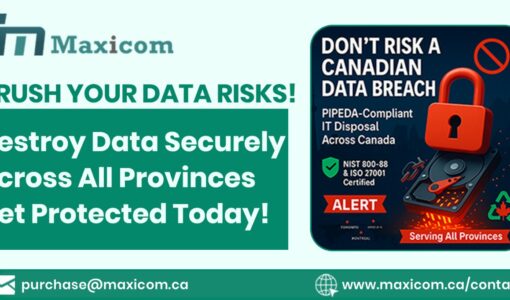
As Canadian organizations generate and store increasing volumes of sensitive data, secure end-of-life IT disposal has become a critical compliance requirement. From financial records and healthcare data to intellectual property and customer information, businesses across Canada rely on servers, laptops, storage arrays, and network devices to manage operations. But when this equipment reaches the end of its lifecycle, improper disposal can expose organizations to data breaches, regulatory penalties, and reputational damage. Certified IT disposal ensures that sensitive data is permanently destroyed and that retired equipment is handled in compliance with Canadian privacy and environmental regulations. Why Certified IT Disposal Matters in Canada Canadian businesses must comply with strict privacy and data protection regulations, including: Under PIPEDA, organizations are required to safeguard personal information throughout its lifecycle — including during destruction. Simply deleting files or formatting drives is not enough. Advanced recovery tools can retrieve data unless proper sanitization standards are followed. What Is Certified IT Disposal? Certified IT disposal refers to the structured, documented, and standards-based decommissioning of IT equipment to ensure: Recognized industry standards include: Following these standards reduces operational risk and strengthens compliance posture. Risks of Improper IT Disposal Organizations that fail to implement certified disposal procedures may face: Data Breaches Residual data on improperly erased drives can be recovered, exposing customer or employee information. Regulatory Violations Failure to securely destroy data can lead to penalties under federal and provincial privacy laws. Reputational Damage Publicized breaches can erode client trust and investor confidence. Financial Liability Legal claims, regulatory fines, and remediation costs can be significant. Demand for certified IT asset disposition (ITAD) services has increased in major Canadian hubs such as Toronto, Vancouver, Montreal, Calgary, Edmonton, and Ottawa as enforcement awareness grows. A Structured IT Disposal Process A compliant IT disposal process typically includes the following stages: 1. Asset Identification and Audit Before destruction, organizations conduct an asset inventory including: This ensures accountability and prevents asset loss. 2. Certified Data Destruction Secure data sanitization methods may include: Organizations should receive a Certificate of Data Destruction that includes: This documentation is essential for audits. 3. Secure Chain of Custody To prevent tampering or unauthorized access, disposal processes should include: This is particularly important for businesses operating across multiple provinces. 4. Environmentally Responsible Recycling Following data destruction, equipment should be: Responsible IT disposal supports Canada’s electronic waste regulations and corporate ESG commitments. Who Requires Certified IT Disposal? Certified IT disposal is essential for: Any organization that stores, processes, or transmits personal information must ensure secure end-of-life handling of IT assets. Key Benefits of Certified IT Disposal When implemented correctly, certified IT disposal provides: It transforms disposal from a liability into a controlled risk management function. Frequently Asked Questions About IT Disposal in Canada Is data destruction legally required in Canada? Yes. Under PIPEDA, organizations must safeguard personal information, including during disposal. What standards should IT disposal follow? Best practice includes compliance with NIST 800-88 for data sanitization and R2 or e-Stewards certification for recycling. Can data destruction be performed on-site? Yes. Many providers offer on-site shredding or wiping services for higher-security environments. What devices require certified disposal? Servers, laptops, desktops, storage arrays, SSDs, HDDs, mobile devices, networking equipment, and backup media. Is recycling documentation necessary? Yes. Certificates of destruction and recycling documentation are important for audits and regulatory reviews. Conclusion In Canada’s regulatory and cybersecurity landscape, certified IT disposal is no longer optional — it is a compliance and risk management necessity. Organizations that implement structured, standards-based IT asset disposition processes protect sensitive data, reduce liability, and strengthen operational resilience. Secure disposal is not just about retiring hardware — it is about safeguarding trust.

Standard

From Waste to Value: Why E-Waste Disposal Should Be a Priority for Businesses

In today’s fast-paced digital world, businesses constantly upgrade their IT infrastructure, replacing outdated devices with newer, more efficient technology. However, this rapid turnover creates a significant challenge—electronic waste (e-waste). From old servers and laptops to networking equipment and storage devices, e-waste disposal is a critical issue that every business must address responsibly. The Growing Problem of E-Waste E-waste is one of the fastest-growing waste streams globally, and businesses contribute significantly to this problem. Discarded IT assets contain hazardous materials like lead, mercury, and cadmium, which can harm the environment and human health if not disposed of properly. In Canada, cities like Toronto, Vancouver, and Montreal are implementing stricter regulations to encourage businesses to adopt sustainable e-waste management practices. Companies must consider solutions that involve recycling, reselling, or refurbishing IT assets to extend their lifecycle and reduce environmental impact. Why Businesses Must Prioritize E-Waste Disposal Maxicom.ca: Your Partner in Responsible E-Waste Disposal At Maxicom.ca, we help businesses across Toronto, Vancouver, Montreal, and Calgary manage e-waste efficiently through our IT asset buyback and recycling solutions. Our services ensure secure data destruction, environmental compliance, and maximum value recovery from retired IT assets. Whether your business has surplus servers, refurbished laptops, or second-hand networking gear, we provide solutions to minimize waste and maximize ROI. How Our Buyback Program Helps Businesses Sustainable IT Practices for a Better Future Businesses must embrace sustainable IT asset management by integrating proper e-waste disposal strategies into their operations. Partnering with an expert like Maxicom.ca ensures compliance, cost savings, and a reduced environmental footprint. Companies in Edmonton, Mississauga, and Ottawa can benefit from our expertise in managing second-hand IT equipment while adhering to local regulations. If your business is upgrading IT infrastructure or looking for a responsible e-waste disposal solution, contact Maxicom.ca today. Let’s build a sustainable future together by refurbishing, reselling, and recycling IT assets effectively.

Standard

From Decommissioning to Upgrading: Transforming Your IT Infrastructure the Right Way

As Canadian organizations modernize their IT environments, data center decommissioning is no longer just about shutting down equipment — it’s about transforming infrastructure strategically, securely, and sustainably. Whether you’re migrating to the cloud, consolidating facilities, or upgrading legacy hardware, a structured decommissioning plan ensures: Here’s how to manage the transition the right way. Why Businesses Decommission Data Centers Organizations across Canada decommission IT infrastructure for several strategic reasons: Decommissioning isn’t the end of infrastructure — it’s the beginning of modernization. Step-by-Step Data Center Decommissioning Process 1️⃣ Strategic Planning & Risk Assessment Before any hardware is removed: Proper planning prevents data loss and operational disruption. 2️⃣ Secure Data Backup & Migration All sensitive data must be: Cloud migration should always be aligned with physical asset disposition planning. 👉 If you are migrating infrastructure, review our guide on Cloud Migration and IT Asset Disposal to ensure secure post-migration handling. 3️⃣ Certified Data Sanitization Before hardware resale or recycling: Data destruction is non-negotiable — especially for healthcare, finance, and public-sector organizations. 4️⃣ Hardware Removal & Asset Categorization Equipment is: Assets are categorized into: 5️⃣ IT Asset Buyback & Value Recovery This is where many businesses lose money. Decommissioned servers, storage arrays, networking devices, and GPUs often retain significant resale value. Through a structured IT Asset Buyback Program, organizations can: 👉 Learn how our Server Buyback Program in Canada helps organizations monetize decommissioned infrastructure. 6️⃣ Environmentally Responsible Disposal For non-resale hardware: This ensures compliance with Canadian provincial e-waste regulations. 7️⃣ Final Reporting & Compliance Documentation A professional decommissioning process includes: This protects your organization during internal and regulatory audits. How Maxicom Global Canada Supports Infrastructure Transformation Maxicom provides end-to-end support for: We help organizations across Toronto, Vancouver, Montreal, Calgary, Edmonton, Ottawa, and nationwide complete infrastructure transitions securely and profitably. Why Structured Decommissioning Matters in 2025 Without a professional plan, organizations risk: Modern infrastructure upgrades should include asset recovery strategy from day one. Final Thoughts Decommissioning is not simply shutting down hardware — it’s a strategic opportunity to modernize responsibly and recover value. By integrating secure data destruction, structured buyback, and environmentally compliant recycling into your IT lifecycle, Canadian organizations can turn infrastructure retirement into operational advantage. 📩 Planning an upgrade or shutdown?Contact Maxicom Global Canada for a secure and value-driven decommissioning strategy.